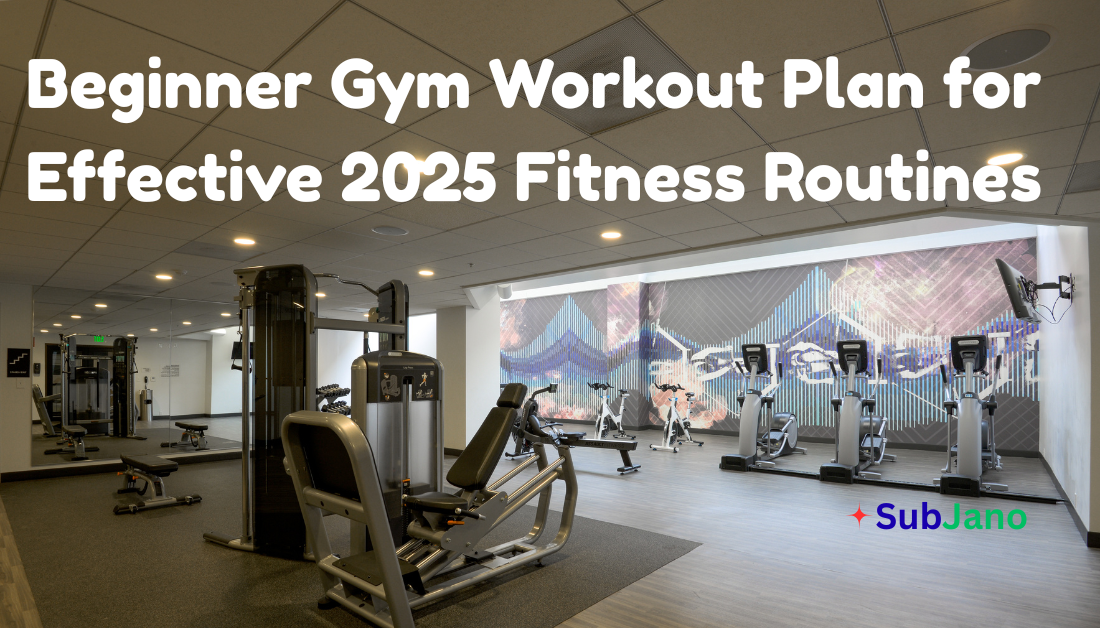
Beginner Gym Workout Plan – Starting a fitness journey at the gym can feel overwhelming, especially for beginners who are unsure where to start, what exercises to perform, or how to build proper routines. A well-structured workout plan helps you progress safely, build strength, improve endurance, and gain confidence with gym equipment. This beginner gym workout plan explains everything you need to know, including training structure, warm-ups, exercise execution, rest periods, weekly schedules, and progression techniques. Following this guide will help you establish a strong foundation for long-term fitness success.
Introduction to Beginner Gym Workout Plan
When you start working out for the first time, your primary goal should be to learn correct exercise form, strengthen your muscles, increase mobility, and prepare your body for more intensive workouts. Many beginners make the mistake of lifting heavy weights too soon or copying advanced routines that their bodies are not yet ready for. This plan ensures that you train safely while still challenging yourself enough to see steady progress.
As a beginner, aim to work out three to four times per week, focusing on full-body routines or upper-body/lower-body splits. Consistency is more important than intensity at this stage. If you follow the schedule outlined below, you will gradually build strength, improve cardiovascular health, and enhance muscle balance, all while reducing the risk of injury.
Warm-Up Routine (10 Minutes)
Beginner Gym Workout Plan – Before beginning any workout, spend at least ten minutes warming up. A proper warm-up increases blood flow, activates muscles, and prepares joints for exercise. This reduces the risk of injury and improves workout performance.
Warm-Up Steps
- Five minutes of light cardio
Options include treadmill walking, gentle cycling, or using the elliptical at a comfortable pace. - Dynamic stretches (two to three minutes)
Perform leg swings, arm circles, hip rotations, and torso twists. These movements improve mobility and activate key muscle groups. - Movement-specific activation (two minutes)
Perform bodyweight squats, light push-ups, or resistance band rows to stimulate the muscles you will use during your workout.
A thorough warm-up will help you feel stronger and more confident once you begin your main training session.
Beginner Full-Body Workout Plan
This workout is designed to train all major muscle groups in one session. Full-body routines are excellent for beginners because they promote balanced muscle development and allow adequate recovery between sessions.
Perform this routine three times per week, such as Monday, Wednesday, and Friday.
1. Squats (Bodyweight or Goblet Squats)
Sets: 3
Reps: 12
Squats strengthen your legs, glutes, and core. Start with bodyweight squats to master form. After you feel comfortable, hold a dumbbell for goblet squats. Keep your chest up, knees aligned with your toes, and push through your heels while standing up.
2. Lat Pulldown or Assisted Pull-Up
Sets: 3
Reps: 10 to 12
This exercise targets your upper back and gives beginners a safe alternative to pull-ups. Use a moderate weight that allows controlled movement. Pull the bar to your chest while keeping your back straight.
3. Dumbbell Bench Press
Sets: 3
Reps: 10
This movement strengthens your chest, shoulders, and triceps. Use a comfortable dumbbell weight and focus on slow, controlled reps. Keep your feet planted and lower the dumbbells to chest level before pressing upward.
4. Seated Cable Row
Sets: 3
Reps: 12
This exercise works the mid-back and improves posture. Keep your elbows close to your body and pull toward your abdomen while maintaining a straight spine.
5. Dumbbell Shoulder Press
Sets: 3
Reps: 10
This movement develops shoulder strength. Sit upright and press the dumbbells overhead without arching your lower back. Use light weights at first to learn proper form.
6. Leg Press Machine
Sets: 3
Reps: 12
The leg press builds leg strength without requiring the balance needed for barbell squats. Keep your feet shoulder width apart and avoid locking your knees at the top.
7. Plank Hold
Sets: 3
Duration: 20 to 30 seconds
Planks strengthen your core and improve stability. Keep your body in a straight line from head to heels without letting your hips sink.
Optional Cardio (10–15 Minutes)
After completing your strength training, you can include light to moderate cardio. This helps improve endurance and support weight management.
Cardio options:
- Treadmill brisk walking
- Stationary biking
- Elliptical training
- Rowing machine
Do not overexert yourself at first. Gradually increase duration or difficulty each week.
Weekly Training Schedule
Below is a simple beginner-friendly weekly layout.
Option A: Three-Day Full-Body Program
- Monday: Full-body workout
- Wednesday: Full-body workout
- Friday: Full-body workout
Option B: Four-Day Upper-Lower Split
- Monday: Upper body
- Tuesday: Lower body
- Thursday: Upper body
- Saturday: Lower body
Most beginners will progress effectively with the three-day full-body routine, but you can switch to the four-day split once you feel comfortable.
Tips for Proper Form and Injury Prevention
Correct technique is crucial for long-term success. Here are essential tips:
- Prioritize form over weight.
Start with light weights and increase gradually. - Move with control.
Avoid using momentum during exercises. Slow, controlled movements stimulate muscles more effectively. - Maintain proper posture.
Keep your spine neutral. Avoid rounding your back during rows or arching excessively during presses. - Use full range of motion.
This improves flexibility and muscle development. - Rest between sets.
Beginners should rest 60 to 90 seconds between sets to maintain energy and proper technique. - Stop if you feel sharp pain.
Muscle fatigue is normal, but sharp or sudden pain is a warning sign. - Ask trainers for guidance.
Most gyms offer help with machines and form adjustments.
Progression Strategy for Beginners
Progressive overload is the process of gradually increasing the difficulty of your workouts. This encourages your muscles to grow stronger.
Here are ways to progress:
- Increase weights slowly.
Add one to two kilograms per dumbbell when the current weight feels comfortable. - Add one or two more reps per set.
- Increase sets
Move from three sets to four sets after several weeks. - Improve technique.
Better control and a deeper range of motion also count as progress. - Add new exercises
Once you master the basics, introduce new variations to challenge different muscle groups.
Aim for small, consistent improvements rather than drastic jumps in weight.
Nutrition and Hydration Guidelines
Training effectively is only part of the process. Your diet plays a major role in muscle recovery and overall progress.
Essential tips:
- Eat a balanced diet containing protein, carbohydrates, healthy fats, fruits, and vegetables.
- Consume protein after workouts to support muscle repair. Good sources include eggs, chicken, fish, tofu, yogurt, or protein shakes.
- Stay hydrated before, during, and after workouts.
- Avoid skipping meals, as this can reduce energy levels and hinder performance.
A consistent nutrition routine supports faster recovery and better workout results.
Rest and Recovery
Beginners often underestimate the importance of recovery. Your muscles grow during rest, not during your workout. To maximize progress:
- Sleep seven to nine hours each night.
- Allow at least one day of rest between full-body workouts.
- Do light stretching on off days to reduce stiffness.
- Avoid training the same muscle group on consecutive days.
Recovery ensures safety, prevents fatigue, and helps maintain long-term consistency.
Final Advice for Long-Term Success
Beginner Gym Workout Plan journey is an important step toward building a healthier lifestyle. The key to long-term success is consistency, patience, and willingness to learn. Avoid comparing yourself with others in the gym. Everyone progresses differently. Focus on building habits, improving your form, and gradually increasing your training intensity.
You do not need advanced routines or heavy weights to see results. What matters most is showing up regularly, following the plan, and enjoying your progress. Over time, you will gain strength, improve posture, feel more energetic, and build confidence in your abilities.
As you continue to grow stronger, you can transition into intermediate routines that include barbell exercises, advanced machines, or more specialized training goals such as fat loss, strength building, or muscle gain.
7-Day Gym Workout Plan
This plan follows a balanced weekly structure:
- Day 1 – Upper Body (Push Focus)
- Day 2 – Lower Body (Quads & Glutes)
- Day 3 – Upper Body (Pull Focus)
- Day 4 – Core & Conditioning
- Day 5 – Full Body Strength
- Day 6 – Active Recovery
- Day 7 – Lower Body (Hamstrings & Glutes)
Intensity: Light to moderate
Rest between sets: 60–90 seconds
Warm-up daily: 5 minutes treadmill/rowing + mobility
Day 1: Upper Body – Push (Chest, Shoulders, Triceps)
1. Bench Press
3 sets × 8–10 reps
Keep feet planted and elbows at a natural angle.
2. Incline Dumbbell Press
3 sets × 10 reps
Controls upper chest; keep a slow tempo.
3. Seated Shoulder Press (Dumbbells or Machine)
3 sets × 8–10 reps
Neutral grip if shoulder discomfort arises.
4. Chest Fly (Cable or Dumbbell)
3 sets × 12–15 reps
5. Lateral Raises
3 sets × 12–15 reps
Small movements, lightweight.
6. Triceps Rope Pushdown
3 sets × 12 reps
7. Overhead Triceps Extension
2 sets × 12 reps
Day 2: Lower Body – Quads & Glutes
1. Back Squat or Goblet Squat
4 sets × 8–10 reps
Focus on stance stability.
2. Leg Press
3 sets × 10 reps
3. Walking Lunges
3 sets × 12 steps per leg
4. Leg Extension
3 sets × 12–15 reps
5. Glute Bridge or Hip Thrust
3 sets × 12 reps
6. Calf Raises
3 sets × 15–20 reps
Day 3: Upper Body – Pull (Back, Biceps)
1. Lat Pulldown or Assisted Pull-up
3 sets × 8–12 reps
2. Seated Cable Row
3 sets × 10 reps
3. Dumbbell Row (Each Side)
3 sets × 10 reps per arm
4. Face Pulls
3 sets × 12–15 reps
Great for posture and rear shoulders.
5. Hammer Curls
3 sets × 10–12 reps
6. Barbell or Dumbbell Bicep Curl
2–3 sets × 10–12 reps
Day 4: Core & Conditioning
1. Plank
3 rounds × 30–45 seconds
2. Cable Woodchoppers
3 sets × 12 reps per side
3. Hanging Knee Raise or Captain’s Chair
3 sets × 12 reps
4. Russian Twists
3 sets × 20 twists
5. Light Conditioning (Choose One)
10–15 minutes
- Treadmill incline walk
- Rowing machine
- Cycling
Day 5: Full Body Strength
1. Deadlift (Romanian for beginners)
3 sets × 8 reps
Maintain neutral spine.
2. Bench Press or Push-ups
3 sets × 8–10 reps
3. Lat Pulldown or Pull-up Variation
3 sets × 8–12 reps
4. Leg Press or Dumbbell Squat
3 sets × 10 reps
5. Shoulder Lateral Raises
2 sets × 15 reps
6. Bicep Curl + Triceps Pushdown Superset
2 sets × 10 reps each
Day 6: Active Recovery
No heavy lifting. Choose any low-intensity activity:
- 20–30 minutes of moderate walking
- Light cycling
- Stretching and mobility work
- Yoga-style body movements
Focus on breathing and improving flexibility.
Day 7: Lower Body – Hamstrings & Glutes
1. Romanian Deadlift
4 sets × 8–10 reps
2. Leg Curl Machine
3 sets × 12 reps
3. Bulgarian Split Squats
3 sets × 8 reps per leg
Excellent for strength and stability.
4. Hip Thrust or Glute Bridge
3 sets × 12 reps
5. Cable Kickbacks
3 sets × 12–15 reps
6. Seated or Standing Calf Raise
3 sets × 15 reps
Optional Cardio Add-On
- Beginners: 10–15 minutes after workouts
- Weight loss focus: 20–25 minutes steady incline walk
- Muscle focus: Keep cardio low intensity to avoid fatigue
Weekly Progression Tips
1. Add weight gradually
Increase by 1–2 kg when you can hit top reps without losing form.
2. Track your workouts
Log sets, reps, and weight.
3. Prioritize form over heavy lifting
Proper movement prevents injury and increases progress faster.
4. Get adequate protein and rest
Aim for balanced meals and 7–8 hours of sleep.
5. Hydrate well
Water supports muscle function and recovery.
Workout Routines for Beginners at Home
Training at home is one of the easiest ways to build consistency when starting your fitness journey. You don’t need expensive machines or a large space; bodyweight exercises can help improve strength, stamina, flexibility, and overall health. The following routines are designed for complete beginners and can be adjusted to match your comfort level.
How to Use These Beginner Routines
- Warm up for 5 minutes before each session
- Focus on slow, controlled movements
- Rest 30–60 seconds between exercises
- Stop if you feel sharp pain
- Aim for 3–4 workout days per week
- Increase intensity gradually as you improve
Beginner Warm-up (Do before every workout)
Perform each for 30 seconds:
- March in place
- Arm circles
- Hip circles
- Ankle rotations
- Light jog in place
- Shoulder rolls
- Neck rotations
This prepares your joints and muscles, boosts circulation, and helps prevent injuries.
Routine 1: Full Body Beginner Workout
Great for complete beginners. Repeat the circuit 2–3 times.
1. Bodyweight Squats – 12 reps
Strengthens legs, glutes, and hips.
2. Wall Push-ups – 10 reps
Builds chest, shoulders, and arms with easier resistance.
3. Glute Bridges – 12 reps
Targets the glutes and reduces lower back strain.
4. Standing Knee Raises – 20 reps (10 each leg)
Improves balance and strengthens hip flexors.
5. Plank (Knee Plank if needed) – 20 seconds
Builds core strength.
6. Superman Hold – 15 seconds
Strengthens the lower back and improves posture.
Routine 2: Lower Body Home Workout
Repeat 2–3 rounds.
1. Squats – 12 reps
2. Reverse Lunges – 10 reps each leg
3. Calf Raises – 20 reps
4. Side Leg Raises – 12 reps each side
5. Glute Bridge Hold – 30 seconds
This routine builds strength in legs, glutes, and hips, essential for daily movement.
Routine 3: Upper Body Home Workout
Repeat 2 rounds.
1. Wall or Knee Push-ups – 10 reps
2. Arm Circles – 30 seconds
3. Tricep Dips (using chair) – 10 reps
4. Shoulder Taps – 20 taps
5. Superman Raises – 12 reps
This improves upper-body strength without weights.
Routine 4: Core Strength Workout
Repeat 2–3 rounds.
1. Crunches – 12 reps
2. Leg Raises – 10 reps
3. Russian Twists – 20 reps
4. Plank – 20–30 seconds
5. Dead Bug – 10 reps each side
Core training helps posture, balance, and stability.
Routine 5: Beginner Fat-Burning Cardio Workout
Do each for 40 seconds with 20 seconds rest.
- Marching in place
- Step jacks (low-impact jumping jacks)
- High knees (slow pace)
- Side-to-side steps
- Fast feet (light steps in place)
Repeat the entire circuit 2–3 times.
Sample Weekly Home Workout Schedule for Beginners
Day 1: Full Body Workout
Routine 1
Day 2: Light Cardio + Core
Routine 5 + Routine 4
Day 3: Rest or stretching
Day 4: Lower Body Workout
Routine 2
Day 5: Upper Body Workout
Routine 3
Day 6: Core + Cardio Mix
Routine 4 + Routine 5
Day 7: Rest or light walking
Tips for Better Progress at Home
- Stay hydrated
- Focus on correct form
- Add reps or rounds weekly
- Keep workouts short and consistent
- Track your progress
- Combine training with a balanced diet
- Sleep at least 7 hours each night
When to Increase Intensity
After 3–4 weeks, if the workouts feel too easy:
- Add 5 more reps per exercise
- Increase plank time by 10 seconds
- Reduce rest time
- Add light resistance bands or household weights
Conclusion – Beginner Gym Workout Plan
A Beginner Gym Workout Plan, along with a structured 7-Day Gym Workout Plan and practical Workout Routines for Beginners at Home, provides a strong foundation for anyone starting their fitness journey in 2025. Whether the goal is building strength, improving endurance, increasing flexibility, or forming healthier daily habits, a clear and manageable plan helps beginners stay consistent and confident. Combining gym and home-based routines also offers flexibility, allowing individuals to progress at their own pace while maintaining long-term motivation.
For many beginners, the biggest challenge is not the workout itself but understanding where to start. A guided plan eliminates confusion by giving simple steps, targeted exercises, and balanced training sessions. It also reduces the risk of injury by emphasizing proper technique, rest, and gradual progression. Including both full-body and split-day routines supports overall development and ensures that every major muscle group receives attention throughout the week.
As fitness continues to evolve in 2025, access to diverse workout options empowers beginners more than ever. Consistency remains the key, and combining gym sessions with home workouts creates sustainable habits that fit into any lifestyle. By following these structured plans, beginners can build confidence, achieve visible results, and develop a long-term commitment to health and fitness.
For assistance with any inquiries, you can reach the Subjano team through their website at https://subjano.online/ or by emailing support@subjano.online for prompt and helpful customer service at any time.